
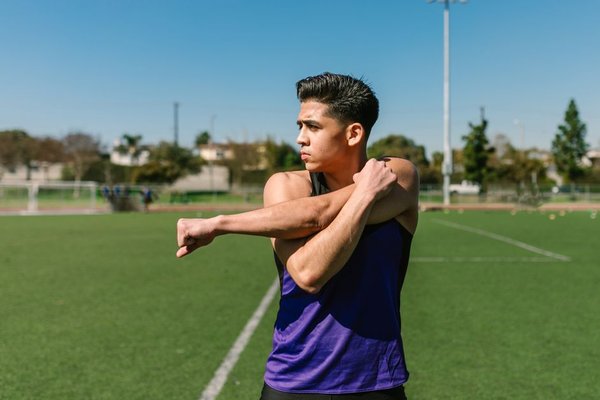
You’ve finished the last set, stopped the treadmill, or rolled up your exercise mat. Should you stretch now, and if so, what should you actually do? Stretching after exercise can be a pleasant way to finish a session and practise moving comfortably through your available range of motion. But it doesn’t need to be an elaborate ritual, and it isn’t a guaranteed cure for tomorrow’s soreness.
The most useful post-workout routine is simple: let your breathing settle, choose a few movements that match what you just trained, and stretch gently without forcing a position. Here’s how to make those minutes worthwhile.
First, cool down rather than dropping straight into a stretch
After vigorous exercise, spend roughly five minutes gradually reducing your effort. Walk after a run, pedal easily after a cycling session, or move around between your final strength exercises and the stretching area. This gives your heart rate and breathing a chance to settle while you remain upright and moving.
Then begin your stretches after exercise. Warm muscles often make gentle movements feel more comfortable, but warmth is not permission to pull harder. If you feel light-headed, unwell, or unusually breathless, stop and address those symptoms rather than pushing through a flexibility routine.
How long should you hold each stretch?
For a straightforward post workout stretching session, aim for about 15 to 30 seconds per position, then switch sides where needed. A light to moderate pulling sensation is enough. Keep breathing normally, avoid bouncing, and ease off if a stretch becomes sharp, pinching, or painful.
One round per side is a practical starting point when time is limited. If flexibility is a longer-term goal, repeat comfortable stretches and practise regularly across the week. Consistency matters more than chasing the deepest position immediately after a demanding workout.
A practical five-minute stretching routine after exercise
You don’t need to stretch every muscle you’ve used. Choose four or five positions that suit your workout and available space. The following movements require little equipment, and most can be adapted with a wall or sturdy chair for support.
Calf stretch at a wall
Place your hands on a wall and step one foot behind you. Keep the back heel down and the rear knee reasonably straight as you lean forward slightly. Feel the stretch through the calf, not the Achilles tendon as a sharp tug. Hold for 20 seconds, then change legs. This is an easy choice after running, walking uphill, or skipping.
Standing quadriceps stretch
Stand beside a wall, bend one knee, and gently bring that foot toward your buttock while holding your ankle or trouser cuff. Keep your knees close and your torso upright rather than arching your back. Hold for 15 to 20 seconds per side. If balancing feels awkward, use a side-lying version on a mat instead.
Seated or lying hamstring stretch
Lie on your back and raise one leg, holding behind your thigh. Keep the other knee bent if that helps your lower back relax. Gently straighten the raised knee only as far as comfortable; a perfectly straight leg isn’t the objective. Hold for 20 seconds and swap sides. Avoid pulling on the knee joint itself.
Hip flexor stretch
Take a short split stance or lower into a supported half-kneeling position with padding beneath the rear knee. Gently tuck your pelvis and shift forward a little until you feel a stretch at the front of the rear hip. Don’t compensate by leaning dramatically backward. Hold for 20 seconds on each side, especially after cycling or prolonged seated work.
Chest and shoulder opening
Stand by a doorway, place a forearm against the frame below shoulder height, and turn your body away slightly. Keep the shoulder relaxed and stop before any pinching at the front of the joint. Hold for around 15 seconds per side. After upper-body training, this can feel more useful than an additional lower-body stretch.
Match the routine to the workout you actually did
Consider two people leaving the gym. One has just completed a 30-minute run; the other has finished rows, presses, and pull-downs. Giving them identical recovery stretching makes little sense. The runner might choose calves, quadriceps, and hips. The lifter might prefer chest, shoulders, and a gentle upper-back movement.
What stretching can and cannot do for recovery
Regular stretching can help you practise and, over time, improve flexibility in the positions you train. It may also provide a comfortable transition out of exercise. That doesn’t mean it flushes out lactic acid, repairs muscle fibres faster, or reliably stops delayed-onset muscle soreness.
A Cochrane review found that stretching before or after exercise produced little or no meaningful reduction in soreness over the following days. Research on post-exercise stretching also hasn’t established a clear advantage over rest for restoring strength. If you’re sore tomorrow, it doesn’t mean you stretched incorrectly or not long enough.
For recovery, give equal attention to sleep, adequate food and fluids, sensible training progression, and rest between demanding sessions. Stretching is an optional useful practice, not a substitute for those basics. A beginner mobility routine can help you organise practice beyond the cool-down.
Make each stretch comfortable, not competitive
Focus on an easy exhale as you settle into the position. Relax your jaw and shoulders, and avoid holding your breath just to reach farther. If a movement feels different on the left and right, adjust the range independently instead of forcing both sides to match.
Don’t stretch through joint pain, tingling, numbness, or a recent strain. If you have an injury, joint instability, a medical condition, or pregnancy-related movement restrictions, get individual guidance from an appropriate healthcare professional. Gentle doesn’t automatically mean suitable for every body.
Common questions about stretching after exercise
Is stretching immediately after a workout necessary?
No. You can finish a workout safely without a formal stretching routine. Gentle post-workout stretching is a reasonable option if it feels good or supports a flexibility goal, but cooling down and managing overall training load matter too.
Should I do static or dynamic stretches afterward?
Gentle static stretches, where you hold a comfortable position, are convenient after exercise. Dynamic movements can also be appropriate when controlled and easy. Choose based on comfort and purpose rather than assuming one method is essential for recovery.
Can stretching prevent soreness the next day?
Not reliably. Studies have found little meaningful effect on delayed-onset muscle soreness. If stiffness develops after unfamiliar or harder exercise, adjust subsequent activity according to how you feel rather than aggressively stretching sore tissues.
How often should I stretch to become more flexible?
Practise regularly across the week, not just after an occasional workout. Comfortable holds, gradual progression, and movements relevant to your goals are more helpful than one unusually intense session. A simple daily flexibility routine may be easier to sustain than a long weekend session.
A better finish to your workout
Stretching after exercise works best when you treat it as a small, adaptable habit. Ease down from your workout, pick a few relevant movements, hold each without pain, and breathe. Enjoy the opportunity to move more comfortably, while keeping expectations realistic: improved flexibility takes ongoing practice, and good recovery involves much more than stretching alone.