
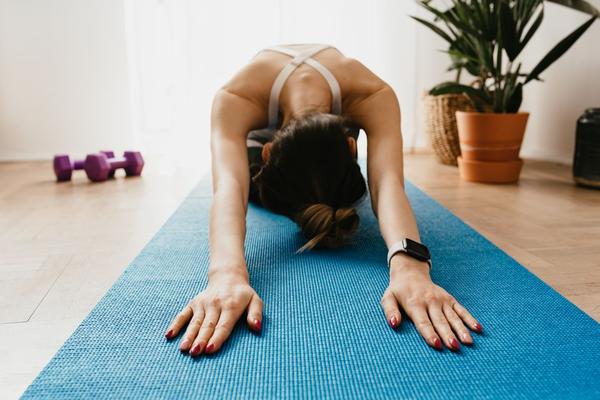
Starting to exercise at home can feel awkward. You may not know which movements to try, how long to work out or whether ten minutes is worth doing. It is. A home workout for beginners should build confidence before intensity. You need enough space to move, comfortable clothes and a plan you can repeat. There is no need to buy equipment or copy a demanding online challenge.
Start with a routine that fits your day
First, decide when exercise could realistically happen. If evenings are unpredictable, try a short session after breakfast or during lunch. Clear space to move, remove trip hazards and keep water nearby. A sturdy, non-wheeled chair is useful for supported movements.
Begin with two or three short sessions per week, not daily hard workouts. Walking and other everyday activities count too. The NHS recommends adults ultimately aim for 150 minutes of moderate activity weekly, plus muscle-strengthening activity on at least two days. That is a longer-term goal, not a test for your first week.
If you have a medical condition, are recovering from injury, are pregnant or have concerns about exercising, seek appropriate healthcare advice. Stop if you develop chest pain, dizziness or unusual breathlessness, and seek medical help. Movement should feel manageable, not alarming.
Six simple movements for your first home workout
This beginner home workout favours controlled movements rather than jumping or rushing. Start with around five to eight repetitions where appropriate, and rest as needed. Good form matters more than completing a particular number.
1. March on the spot
Stand tall and march gently for 30 to 60 seconds, swinging your arms naturally. Start slowly and increase your pace slightly as you warm up. If standing is difficult, try seated marching in a stable chair. You can also use marching to recover between exercises.
2. Chair sit-to-stands
Sit near the front of a stable chair with your feet planted. Lean forward slightly, stand up under control, then lower yourself slowly. Use your hands for support if needed. Position the chair against a wall if it might slide. This trains the muscles you use when rising from a seat.
3. Wall press-ups
Place your palms against a solid wall at shoulder height. Step back comfortably, bend your elbows to bring your chest towards the wall, then press away. Keep your body relatively straight and breathe steadily. Standing closer to the wall makes the exercise easier.
4. Supported heel raises
Hold a sturdy chair or fixed kitchen worktop. Raise your heels until you are on the balls of your feet, pause, then lower slowly. Avoid rocking forwards. This works your calves and lets you practise balance without weights.
5. Standing side steps
With support nearby if necessary, step sideways, bring the other foot towards it, then step the opposite way. Continue for about 30 seconds. Keep steps small in a narrow room. This adds gentle sideways movement to a routine otherwise dominated by forward motion.
6. Standing knee lifts
Near stable support, lift one knee a little, lower it and change sides. Keep your torso upright rather than leaning back. Hold the support or march while seated if balance is uncertain. Alternate slowly for 30 seconds, focusing on feeling steady.
A realistic 15-minute workout routine for beginners
Spend three minutes marching gently and loosening your shoulders. Perform five to eight chair sit-to-stands, five to eight wall press-ups and eight heel raises. Add 30 seconds of side steps and 30 seconds of knee lifts. Rest for 30 to 60 seconds between movements, or longer when needed.
If you feel comfortable, repeat the sequence once. Finish with two minutes of easy marching and relaxed movement. Your session might take slightly less or more than 15 minutes depending on rest breaks. One round is enough if that feels right. The best workout is one you can recover from and willingly repeat.
For example, someone working from home could clear a space beside the sofa at 12.30 pm, use a dining chair for sit-to-stands and practise wall press-ups in the hallway. There is no special kit or journey to organise, making the routine easier to keep on a busy Tuesday.
Plan your first two weeks without overdoing it
In week one, try the routine on Monday and Thursday, allowing recovery time between sessions. On Tuesday or Saturday, take a comfortable walk or enjoy another activity. A walking plan for beginners can provide structure outside strength sessions.
In week two, repeat the two workouts and consider a third only if you feel ready. You could add one repetition to each movement or extend marching by 15 seconds. Change one thing at a time; do not double everything simply because the first session felt easy.
Moderate aerobic activity should make you breathe faster while still allowing conversation. If talking becomes difficult, slow down. Home fitness develops gradually through regular movement and strength work, not through exhausting every session.
Make it easier to continue than to quit
Keep workout clothes visible, choose session times in advance and mark completed workouts on a calendar. Do not judge progress only by weight or appearance. Notice whether standing from a chair feels easier, balance improves or you need fewer pauses.
When motivation is low, try the warm-up and one round. If you miss a workout, return at the next opportunity rather than making up for it with an exhausting session. A gentle stretching routine may also become a comfortable post-workout habit if the movements suit you.
Frequently asked questions
Can complete beginners exercise at home without equipment?
Yes. Chair sit-to-stands, wall press-ups and other bodyweight strength exercises are accessible starting points. A stable chair and clear space are often enough.
How many days a week should a beginner work out?
Two or three short sessions can be a practical starting schedule, with lighter activity on other days. Work gradually towards UK activity guidelines according to your health and fitness.
Is ten minutes of exercise worth doing?
Yes. Short sessions contribute to overall activity and help establish a habit. You do not need a long workout for movement to be worthwhile.
Should I feel sore after every workout?
No. Mild soreness can happen after unfamiliar movements, but it is not proof of effectiveness. Sharp, persistent or worsening pain means you should stop and seek advice.
Build confidence before adding difficulty
Your first goal is not to finish a punishing workout. Learn a few comfortable movements, find a workable time and return for the next session. Start with a manageable beginner home workout, record how it felt and adjust gradually. Exercising at home can then become a repeatable part of ordinary life rather than an ambitious plan that fades after a week.